
Community-Focused Care Accreditation: How Data Collection and Partnership Requirements Changed
Jun 10, 2026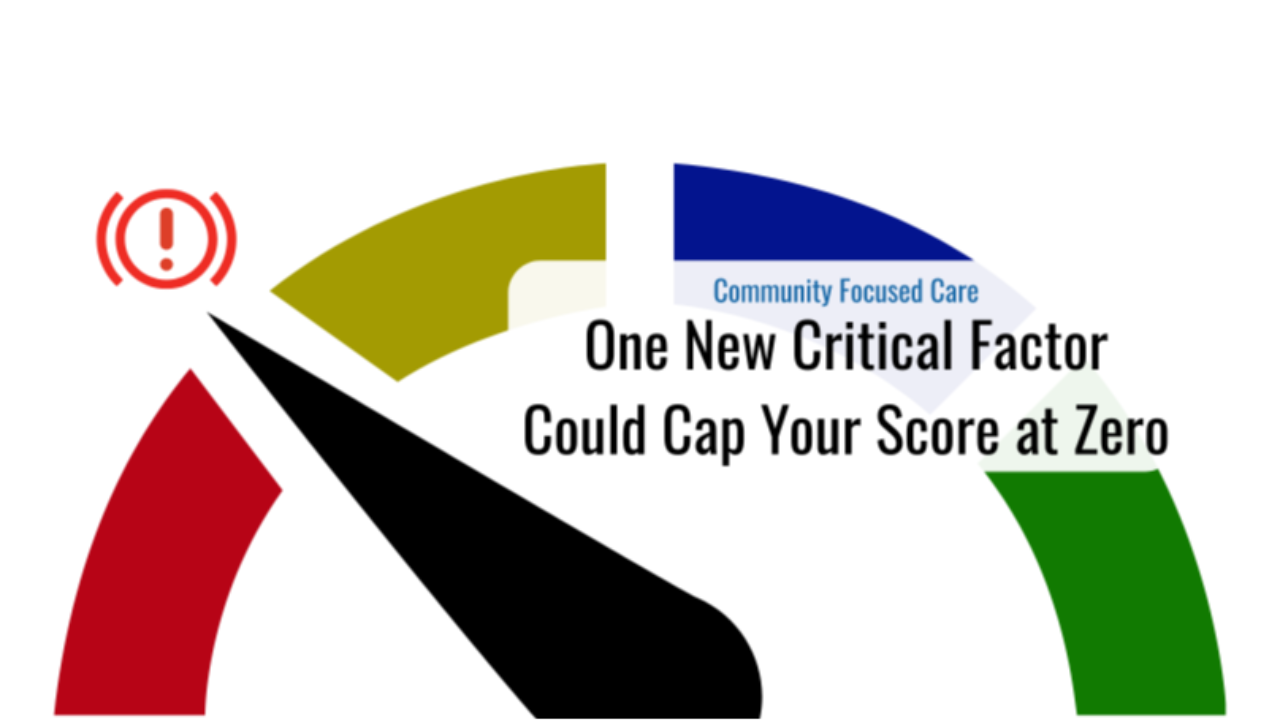
What your organization needs to know about CFC 1 and CFC 2 — including a new critical factor that can cap your score.
Effective for NCQA surveys on or after July 1, 2026
Health Equity Plus Accreditation has been replaced by Community-Focused Care Accreditation. Like its predecessor, CFC is built around a core mission: understanding and addressing the social needs of the communities your members live in, and building cross-sector partnerships to do something meaningful about them. But the 2026 standards are not simply a refresh. They introduce new elements, consolidate others, and — critically — designate a new critical factor in the partnerships standard that can cap your entire element score if it isn't met.
This blog covers CFC 1 (Collection and Analysis of Community and Member- or Patient-Level Data) and CFC 2 (Cross-Sector Partnerships and Engagement). Blog 4 covers CFC 3–5.
A critical factor is not just a hard requirement — it is a scoring ceiling. If your organization does not meet a critical factor, your element score is capped at ZERO regardless of how well you perform on every other factor in that element.
CFC 1: The Process/Evidence Split Is the Most Important Structural Change
The former HE Plus 1, Element C (Collecting Individuals' Social Needs Data) has been split into two separately scored elements in the 2026 standards. This is the most consequential structural change in CFC 1, and understanding it early will save significant rework later.
KEY CHANGE IN CFC 1
Former HE Plus 1, Element C is now two elements: CFC 1, Element C (Process for Collecting Social Needs Data) and CFC 1, Element D (Evidence of Collecting Social Needs Data). NCQA now evaluates your documented process and your actual evidence of collection as distinct, separately scored activities.
This matters because organizations that have strong process documentation but inconsistent implementation — or robust collection data but poorly documented processes — will be exposed under the new structure in ways they weren't before. Both dimensions must be solid to score well across these two elements.
The full picture of CFC 1 changes:
CFC 1, Element A (Defining the Community) — scope of review updated. Core requirement unchanged.
CFC 1, Element B (Acquiring Communities' Social Risk Data) — stem and factor 1 language revised; order of factors 2–3 revised; look-back period for factor 3 updated. Review the updated factor sequence in your scoring trackers.
CFC 1, Element C (Process for Collecting Social Needs Data) — formerly the first half of HE Plus 1, Element C. Now only covers the documented process. Data sources and scope of review revised accordingly.
CFC 1, Element D (Evidence of Collecting Social Needs Data) — NEW. The second half carved from former HE Plus 1, Element C. Requires reports and materials demonstrating that collection is actually happening.
CFC 1, Element E (Reporting Social Needs Screening and Intervention) — NEW. No prior equivalent. Organizations must report on social needs screening and intervention activity — likely aligning with CMS and state reporting frameworks.
CFC 1, Element F (Assessing Community Social Risks and Social Needs) — NEW consolidated element. Former HE Plus 1, Elements D (Identifying Social Risks) and E (Identifying Social Needs) were separately scored. They are now combined into one element. Two scoring opportunities become one.
CFC 1, Element G (Identifying Subpopulations, formerly Population Segmentation or Risk Stratification) — renamed, with revised factor language for factors 1 and 2, a new factor 3 added, revised frequency requirement for factor 1, and an updated look-back period. Review this element carefully.
CFC 1, Element H (Prioritizing Social Risks and Social Needs) — stem, factors 1–2 language and scope, and scope of review all revised.
What this means for your organization
Audit your current CFC 1 documentation for the process/evidence split. If your social needs data collection is documented in one place without distinguishing your process from your evidence, you will need to restructure before your next survey.
CFC 2: Cross-Sector Partnerships — A Consolidated Assessment and a New Critical Factor
The cross-sector partnerships standard has been restructured in two important directions: it simplifies in some areas (consolidating two elements into one) and raises the bar in others (adding a critical factor and new requirements in the agreements element).
The most significant change is in Element D — and the new critical factor designation is the single most important thing for any organization with community-based partner agreements to understand before their next survey.
NEW FACTOR
In CFC 2, Element D (Agreements With Partners to Deliver Resources/Interventions), Factor 1 is newly designated as a critical factor. If your organization does not meet Factor 1, your element score is capped at ZERO score— regardless of performance on every other factor. Review your partner agreements to ensure Factor 1 requirements are fully met.
Beyond the critical factor, CFC 2, Element D has changed substantially throughout: new factors 2 and 3 are added, factor 4 language is revised, the scope of factor 5 is revised, scoring is revised, and the evidence sample has been removed from the scope of review. This element requires a thorough line-by-line review against your existing partner agreements. The 3.30.26 changes the Renewal Survey look-back period for factors 3 and 4 to “prior to the survey date” since they are new.
Other CFC 2 changes:
CFC 2, Element A (Social Resource Gap Assessment) — NEW consolidated element. Former HE Plus 2, Elements A (Social Risk Resource Assessment) and B (Social Need Resource Assessment) have been retired. Their requirements are merged into this single new element. Two scoring opportunities become one — adjust your gap analysis accordingly.
CFC 2, Element B (Selecting Community-Based or Cross-Sector Initiatives) — formerly HE Plus 2, Element F. Stem and factors 1–2 language revised.
CFC 2, Element C (Selecting Appropriate Partners) — stem and factors 1–3 language revised.
CFC 2, Element E (Engaging with Community-Based or Cross-Sector Initiatives) — formerly HE Plus 2, Element G. Stem and factors 1–2 language revised.
CFC 2, Element F (Engaging With Partners to Deliver Resources/Interventions) — formerly HE Plus 2, Element E. Stem and factors 1–2 language revised.
ELEMENT ORDERING NOTE
The ordering of CFC 2, Elements E and F is reversed from HE Plus 2. What was Element E (Engaging with Partners) is now Element F, and what was Element G (Engaging with Initiatives) is now Element E. Update all internal documentation, trackers, and scoring templates.
The consolidation of former HE Plus 2, Elements A and B into one CFC 2, Element A reduces your scoring opportunities in this area. Organizations that were close to scoring thresholds in the old structure should re-model their expected scores under the new framework.
What this means for your organization
Pull your current partner agreements and review them against the new CFC 2, Element D requirements — especially Factor 1, which is now a critical factor. This is the highest-priority compliance gap to close before your next survey.
Ready to get started?
Has this blog been incredibly helpful? Just think of what our consulting and training will do for you! Our team can review your CFC partner agreements, social needs data collection documentation, and element scoring against the 2026 standards. Contact us for a readiness assessment.
Send us an email: [email protected]
Copyright © 2026 Managed Healthcare Resources, Inc. All Rights Reserved.
Next in this series: Blog 4 covers CFC 3 (data management), CFC 4 (program structure and stakeholder engagement), and CFC 5 — including the expanded disparity analysis requirements and the brand-new element requiring organizations to prove their social needs interventions actually work.


