Why Credentialing Organizations Miss NCQA Quality Program Requirements — And How to Fix It
Jun 29, 2026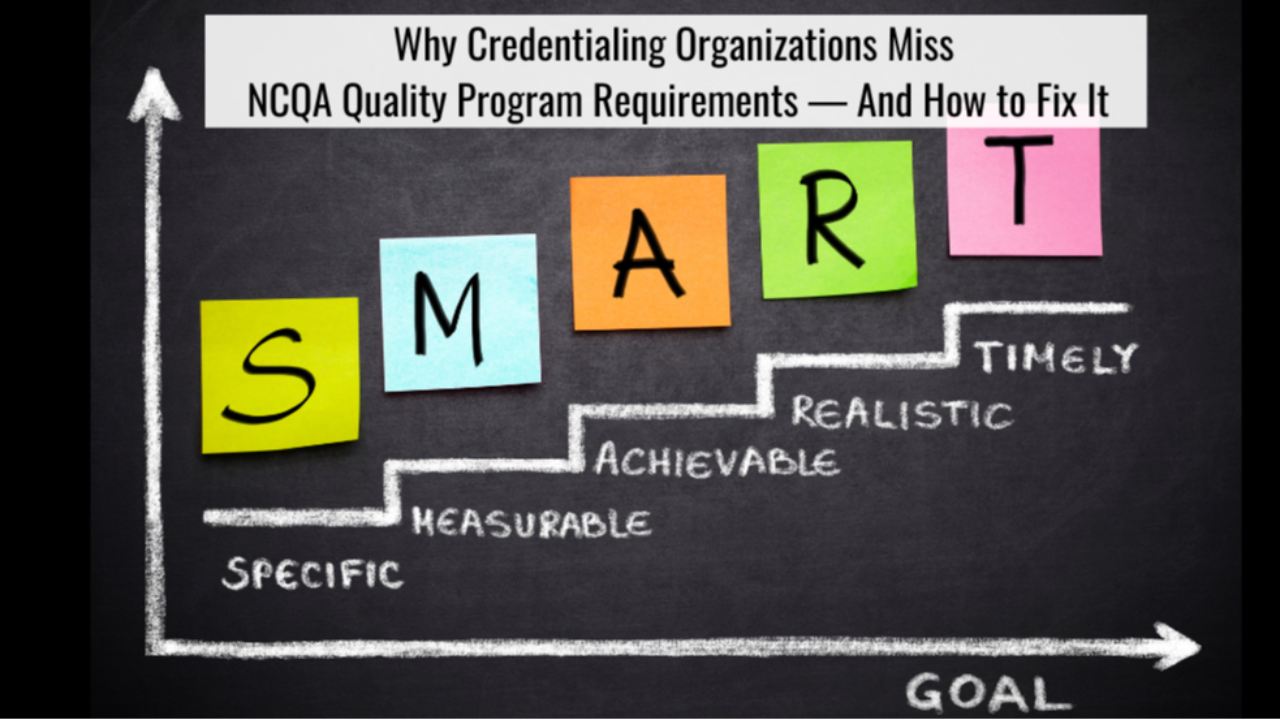
For organizations pursuing or maintaining NCQA Credentialing Accreditation, the Quality Improvement (QI) Program standards often appear deceptively straightforward. Many credentialing organizations believe that having a few metrics, an annual report, or a quality committee is sufficient.
Unfortunately, survey results consistently demonstrate otherwise.
Two of the most commonly missed requirements involve:
- Element A: Quality Improvement Program Structure
- Element B: Analysis of Quality Activities
Specifically, organizations struggle with:
- Developing true SMART goals
- Performing meaningful assessment of activities against goals
- Conducting analysis that goes beyond simply displaying data
These deficiencies frequently lead to missed points and accreditation risk — even in organizations with otherwise strong operational performance.
The Real Problem: Organizations Confuse Monitoring With Quality Improvement
One of the largest misconceptions in credentialing operations is believing that collecting data equals conducting quality improvement.
NCQA expects far more than dashboards or tracking logs.
The standards require organizations to:
- Define measurable objectives
- Establish performance expectations
- Analyze results against those expectations
- Identify opportunities for improvement
- Assess barriers and root causes
- Implement interventions
- Reassess effectiveness over time
Without this full cycle, the QI program becomes administrative rather than strategic.
Element A: Quality Improvement Program Structure
Under Element A, the organization must maintain a written QI plan or comprehensive policies and procedures that include:
- A defined scope of activities
- Defined goals and objectives
- A defined process for assessing performance
While many organizations adequately define scope and processes, the most common failure occurs within the requirement for SMART goals and objectives.
What NCQA Actually Expects for SMART Goals
NCQA specifically states that goals must be:
- Specific
- Measurable
- Attainable
- Relevant
- Time-bound
However, many credentialing organizations submit goals such as:
- “Improve turnaround times”
- “Increase accuracy”
- “Enhance provider satisfaction”
- “Reduce complaints”
These are aspirations — not measurable quality goals. And even though these are specified, we still encounter quality programs without them during surveys and in consulting.
Weak Goal vs. NCQA-Compliant SMART Goal
Weak Goal
Improve credentialing timeliness.
SMART Goal
Within 6 months, complete 95% of all credentialing verifications within 90 calendar days.
The difference is significant.
The SMART goal establishes:
- A measurable target
- A timeframe
- A defined population
- A quantifiable expectation
Without these elements, organizations cannot effectively measure success or conduct meaningful analysis later in Element B.
Another Frequent Gap: Goals Not Connected to Indicators
A second major deficiency occurs when organizations identify quality indicators but fail to align them with measurable goals.
For example:
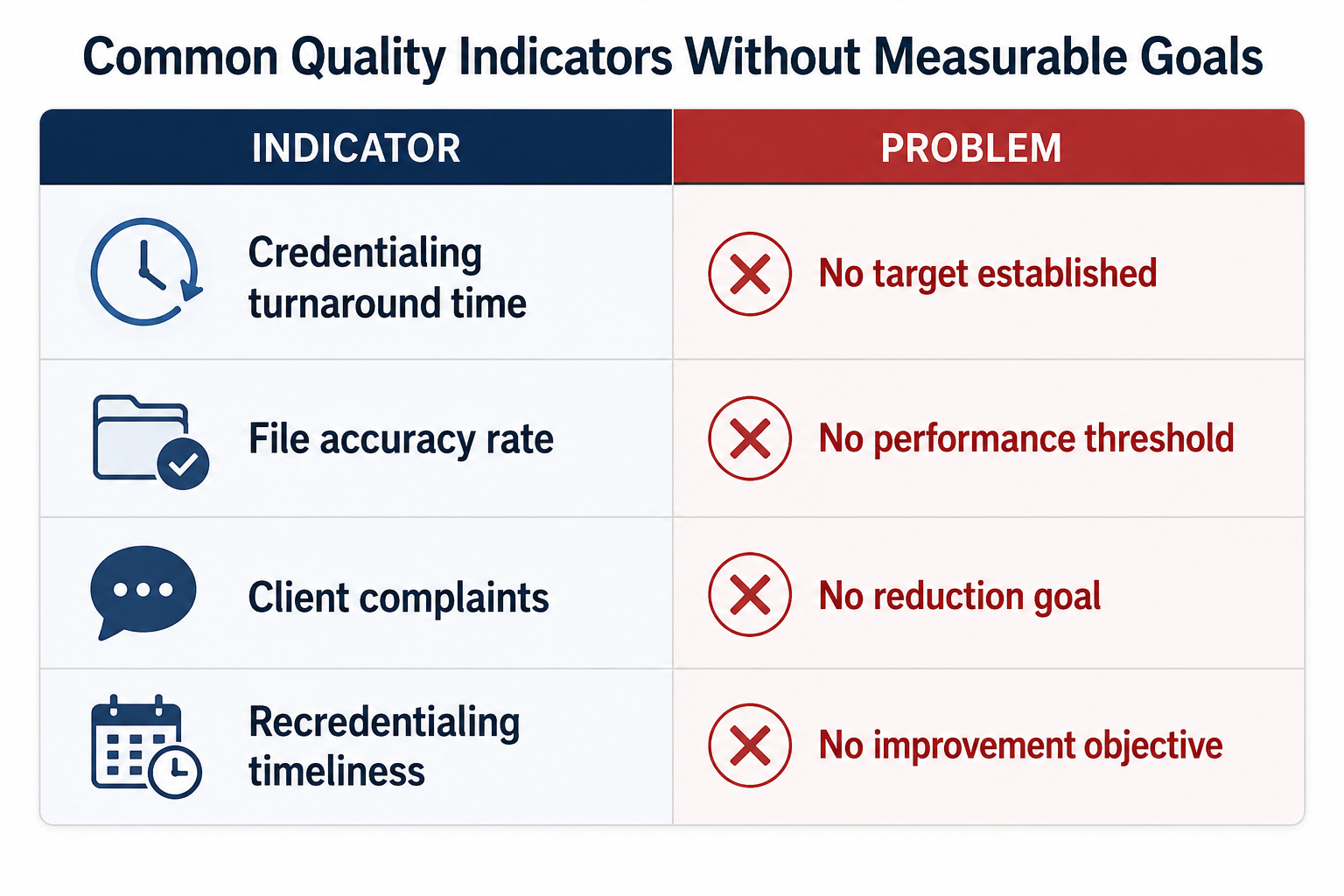
NCQA expects every key indicator to have in the documented process (and in practice):
- Defined measurement methodology
- Associated performance expectation
- Ongoing monitoring process
If no benchmark exists, the organization needs to establish their baseline and determine a goal of decreasing by X% or maintaining a “not to exceed” threshold. Otherwise the organization cannot identify demonstrate whether performance is acceptable or there are opportunities for improvement (Element B, factor 3) or implement improvements (Element C).
Element B: Analysis of Quality Activities
Element B is where many credentialing organizations lose critical points because their analysis remains superficial.
NCQA requires annual analysis that includes:
- Evaluation of aggregate data and trends
- Assessment of opportunities for improvement
- Assessment of barriers to improvement
The Biggest Mistake: Reporting Data Without Analysis
Many organizations provide tables, graphs, or percentages but fail to interpret the results.
NCQA explicitly states:
“Analysis of quality information must be more than displaying data.”
This distinction is critical.
Example of Weak Analysis
Credentialing turnaround time averaged 92 days in Q1, 91 days in Q2, 94 days in Q3, and 90 days in Q4.
This is reporting.
It does not explain:
- Whether the goal was met
- Whether trends improved or worsened
- Why performance changed
- Whether intervention is needed
Example of Strong NCQA-Compliant Analysis
The organization failed to meet its goal of completing 95% of credentialing verifications within 90 calendar days during Q1–Q3. Performance improved in Q4 following implementation of revised file tracking procedures and weekly aging audits. Analysis identified staffing shortages and incomplete provider submissions as primary barriers affecting timeliness.
This analysis:
- Compares results against goals
- Evaluates trends over time
- Identifies improvement opportunities
- Assesses barriers and root causes
- Links operational interventions to outcomes
That is the level of evaluation NCQA expects.
Root Cause Analysis Is Frequently Missing
Another major deficiency in Element B involves barrier assessment.
NCQA requires organizations to conduct:
- Root cause analysis, or
- Barrier analysis involving operational staff familiar with the process
Yet many credentialing organizations simply state:
- “Staffing issues impacted performance”
- “Provider delays contributed”
- “Volume increased”
These statements are insufficient unless the organization demonstrates deeper operational evaluation.
Effective Barrier Analysis Examples
Instead of:
Staffing shortages affected turnaround time.
Use:
Analysis demonstrated that 38% of delayed files were pending primary source verification follow-up because only one staff member was assigned to PSV outreach during peak submission periods.
Or:
Review of complaint trends identified inconsistent escalation procedures between intake and verification staff, contributing to delayed provider communication.
The more specific and operationally grounded the analysis, the stronger the survey defensibility.
Element C: Organizations Often Stop Too Early
Even when organizations identify opportunities, many fail to demonstrate:
- Specific interventions
- Follow-up evaluation
- Measurable improvement
Element C requires organizations to implement interventions and reassess effectiveness over time.
A common mistake is documenting:
- “Staff were educated”
- “Processes were reviewed”
- “Meetings were held”
without demonstrating:
- What changed operationally
- Why the intervention should improve outcomes
- Whether performance actually improved afterward
NCQA expects interventions linked directly to identified barriers and measurable outcomes.
Practical Recommendations for Credentialing Organizations
- Rewrite Every Goal Into SMART Format
Every indicator should have:
- Numerical target
- Defined timeframe
- Measurable outcome
- Operational relevance
- Analyze Against Goals — Not Just Prior Data
Trend reports alone are insufficient.
Every analysis should answer:
- Was the goal met?
- Why or why not?
- What contributed to results?
- What operational risk exists?
- Incorporate Root Cause Analysis
Move beyond generalized explanations.
Use:
- Workflow analysis
- Staffing analysis
- Aging reports
- Complaint categorization
- Process mapping
- Audit findings
- Link Interventions to Barriers
Interventions should directly address identified causes.
Weak intervention:
Staff education conducted.
Strong intervention:
Implemented automated credentialing aging alerts and reassigned PSV follow-up responsibilities to dedicated staff.
- Reassess Intervention Effectiveness
Organizations must demonstrate:
- Follow-up measurement
- Post-intervention comparison
- Whether improvement occurred
Without reassessment, the quality cycle remains incomplete.
Final Thoughts
The NCQA Credentialing QI standards are not intended to create administrative paperwork. They are designed to ensure organizations actively evaluate and improve credentialing operations using measurable, data-driven methodologies.
The organizations that perform best during survey are those that:
- Treat quality management as an operational discipline
- Build meaningful SMART goals
- Conduct true analytical evaluation
- Perform root cause analysis
- Demonstrate measurable improvement over time
Credentialing organizations that master these elements not only improve accreditation outcomes — they strengthen operational consistency, reduce risk, and improve client confidence in their credentialing processes.
Missing points in Elements A, B, or C rarely happens because organizations lack commitment to quality. More often, it occurs because documentation does not demonstrate the full quality improvement cycle that NCQA expects. Identifying these gaps before survey can save significant time, reduce rework, and improve survey outcomes.
Struggling to translate NCQA requirements into practical, survey ready processes? Our Credentialing and Recredentialing Training walks your team through the standards, common survey findings, and practical implementation strategies so you can build a stronger credentialing program with confidence.
https://www.managedhealthcareresources.com/credentialing-recredentialing
Looking for templates instead of starting from scratch? MHR offers quality improvement templates and tools designed to help organizations document analyses, establish measurable goals, and create NCQA compliant quality improvement processes.
https://www.managedhealthcareresources.com/credentialing-tools
If you're preparing for an upcoming NCQA Credentialing survey or want an experienced second set of eyes on your Quality Improvement Program, schedule a Discovery Call with Managed Healthcare Resources. We'll help you identify gaps, strengthen your documentation, and prepare for a more confident survey.
https://www.managedhealthcareresources.com/contact
Source material derived from NCQA 2026 Credentialing Accreditation Quality Improvement standards.
Copyright © 2026 Managed Healthcare Resources, Inc. All Rights Reserved.


